


February 6, 2026
By: Thiago Cruz
Planning a multi-generational villa vacation is not just about choosing a beautiful property. It is about coordinating people with different ages, routines, physical needs, expectations, and emotional priorities, all within one shared space.
When grandparents, parents, children, and teenagers travel together, the margin for error becomes smaller. Small logistical oversights can quickly turn into daily friction. At the same time, when planned correctly, a multi-generational villa stay can offer something few other travel formats can: privacy, flexibility, and meaningful shared time without the rigidity of hotels or resorts.
This guide is designed to help families plan complex, multi-generational villa vacations with clarity and confidence. It focuses on logistics, structure, and decision-making, the elements that quietly determine whether the experience feels effortless or exhausting.
Why standard family vacation advice doesn’t work for three generations
Most family travel advice is written for nuclear families. It assumes similar energy levels, shared schedules, and aligned expectations. Multi-generational travel breaks all three assumptions.
Grandparents may value comfort, predictability, and calm. Parents often juggle logistics, responsibilities, and expectations. Children and teenagers need stimulation, flexibility, and space. Planning that works for one group can easily frustrate another.
A villa vacation brings everyone under one roof. This amplifies both the benefits and the risks. Without a structured plan, daily routines such as meals, rest time, or activities can become sources of tension.
On the surface, renting a large villa sounds simple. In reality, it introduces complexity in:
Space allocation and privacy
Noise flow between rooms
Accessibility and mobility
Safety for children
Daily operational logistics
A villa that works perfectly for a group of adults may be completely unsuitable for a family that includes elderly travelers or young children. Layout, flow, and support services matter more than aesthetics alone.
Multi-generational trips often carry emotional weight. They may mark milestones, reunions, or rare moments when everyone can be together. They also tend to involve higher budgets and shared financial responsibility.
This combination increases pressure. The person leading the planning often feels responsible not only for logistics, but for everyone’s enjoyment. A structured planning approach reduces this burden and protects relationships as much as it protects the trip itself.
For older travelers, comfort is not a luxury — it is a prerequisite. Key considerations often include:
Minimal stairs or clear handrails
Easy access to bedrooms and bathrooms
Quiet zones away from children’s play areas
Comfortable seating indoors and outdoors
Proximity to medical services
Ignoring these needs can limit participation or cause fatigue, which affects the group dynamic as a whole.
Parents often sit at the center of the experience. They are managing children, coordinating schedules, and anticipating issues before they arise. Villas that work well for parents typically offer:
Clear separation between sleeping and social areas
Bedrooms that allow children to sleep without noise disruption
Easy supervision of common spaces
Reliable staff support for meals and housekeeping
When flow works well, parents can relax. When it does not, they carry the friction for everyone.
Children and teenagers thrive when they have both freedom and structure. Important elements include:
Safe outdoor spaces and pools
Entertainment options suitable for different ages
Areas where they can socialize without disturbing others
Clear boundaries and supervision visibility
A villa that keeps younger guests engaged reduces pressure on adults and helps maintain a positive atmosphere throughout the stay.
One common mistake is letting the most vocal or decisive person dominate planning. This often leads to compromises that look fine on paper but fail in practice.
A better approach is to identify non-negotiables for each generation early. When everyone feels seen in the planning phase, flexibility becomes easier later.
Bedroom layout is one of the most underestimated factors in multi-generational travel. Families should look beyond the number of bedrooms and focus on placement.
Ideal layouts often include:
Separate bedroom wings or floors
Master suites positioned away from children’s rooms
Equal-quality bedrooms to avoid hierarchy tension
Privacy allows rest. Proximity enables connection. The right balance depends on the group, not the villa’s marketing description.
Bathroom availability is critical for large groups. En-suite bathrooms reduce morning congestion and preserve privacy, especially for older guests.
Night-time accessibility also matters. Long corridors, outdoor pathways, or steep stairs can become obstacles after dark. Good lighting and clear access routes are not details, they are functional necessities.
Large families need common spaces that can absorb activity without feeling crowded. Look for:
Spacious dining areas with flexible seating
Living rooms that allow multiple conversations
Shaded outdoor areas for different times of day
Spaces that are too open or too narrow often create noise issues or force everyone into the same rhythm.
In some destinations, renting two connected villas or a main villa with guest houses works better than one massive structure. This setup offers:
Greater privacy
Reduced noise transfer
More flexibility in routines
The decision should be based on group dynamics, not just availability.
Pools are often central to villa life, but they also introduce safety and supervision requirements. Families should consider:
Pool fencing or alarms
Clear sightlines from common areas
Shallow zones for children
Non-slip surfaces
Outdoor spaces should invite relaxation without creating constant supervision stress.
For multi-generational groups, location convenience often outweighs dramatic views or extreme privacy. Long transfer times, difficult roads, or isolated settings can quickly become exhausting — especially for elderly travelers or families with young children.
Key questions to ask:
How long is the transfer from the airport?
Are medical facilities within reasonable reach?
Is grocery delivery or local provisioning reliable?
A stunning villa loses its appeal if basic logistics become daily challenges.
Walkable locations offer freedom. They allow:
Short, spontaneous outings
Independent movement for different generations
Reduced reliance on drivers and vehicles
Car-dependent destinations can work, but only when transport is professionally coordinated. Otherwise, mobility becomes a bottleneck.
Privacy is valuable, but total isolation rarely suits large families. Proximity to beaches, promenades, cafés, or cultural areas gives flexibility — especially when not everyone wants the same pace.
The best locations offer controlled access to activity: close enough to enjoy, far enough to retreat.
Remote villas often look appealing online, but in practice they:
Increase transfer times
Complicate provisioning and staffing
Limit flexibility for short outings
Add stress in case of medical or logistical issues
For multi-generational trips, resilience and access matter more than seclusion.
Not every luxury destination can comfortably support a multi-generational villa stay.
The destinations below stand out because they consistently deliver on accessibility, villa design, medical infrastructure, and service quality — the factors that truly matter when traveling with three or more generations.
These are destinations where complex family trips work smoothly in real life.
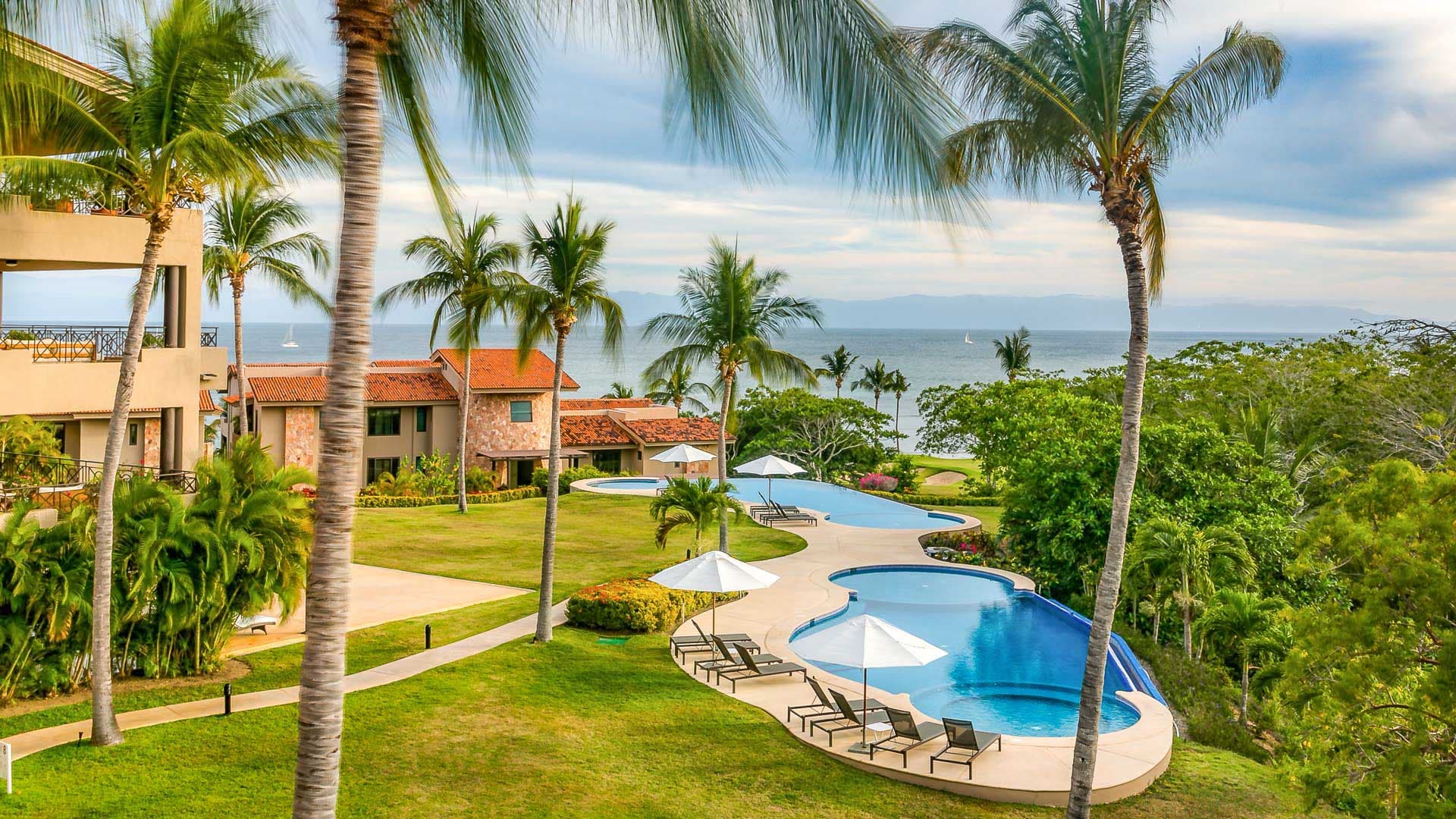
Punta Mita is one of the most reliable destinations in the world for multi-generational villa vacations and sets the benchmark for ease and structure.
Why it works so well:
Gated community with controlled access and on-site medical services
Villas designed specifically for extended families, often with guest houses or separate wings
Flat terrain and short internal distances
Calm beaches suitable for children and seniors
Strong culture of private chefs, housekeeping, and concierge support
Punta Mita is ideal for families seeking maximum comfort, predictability, and low logistical friction.
The Riviera Maya works exceptionally well for multi-generational groups when villas are carefully selected within well-managed areas.
Key strengths:
Easy access from Cancun International Airport
Purpose-built luxury villas with generous common areas
Proximity to private hospitals and medical facilities
Shallow beaches and warm climate year-round
Strong availability of staff and family-oriented services
This destination suits families looking for space, warmth, and resort-level support with the privacy of a private villa.
Barbados has a long-established villa culture and remains one of the most senior-friendly destinations in the Caribbean.
Why families choose Barbados:
Excellent healthcare and emergency services
Flat coastal areas that reduce mobility challenges
Villas designed for long family stays, often with full staff
Calm west coast beaches ideal for all ages
Strong sense of safety and familiarity
Barbados works particularly well for families traveling with grandparents who value comfort, service, and reassurance.
The Algarve is one of Europe’s strongest destinations for multi-generational villa travel, combining accessibility with family-oriented infrastructure.
Key advantages:
Short transfers from Faro Airport
High-quality private healthcare nearby
Flat resort areas ideal for mixed mobility levels
Villas designed with outdoor living and pool safety in mind
Calm beaches and well-developed services
The Algarve is especially suitable for families seeking a relaxed European setting with minimal logistical complexity.
Cascais and Estoril offer a refined, highly accessible option for multi-generational families who value proximity to a major city.
Why they work well:
Close to Lisbon Airport with short transfer times
Walkable town centers and promenades
Excellent hospitals and private clinics nearby
Elegant villas suited for smaller to mid-sized family groups
Easy balance between privacy, culture, and dining
These areas are ideal for families who want urban convenience without sacrificing calm.
Even within these destinations, villa selection is critical.
Terrain, layout, staffing, and proximity to services matter more than destination reputation alone.
For multi-generational travel, where you stay within the destination is often more important than the destination itself.
For high-quality villas that genuinely support large families, planning should begin 6 to 12 months in advance, especially for peak seasons or school holidays.
Early planning allows:
Better villa selection
Time to align schedules
Proper logistical coordination
Late planning often forces compromises that affect comfort.
Short stays intensify pressure. Longer stays allow rhythms to settle.
Recommended minimums:
5–7 nights for nearby destinations
7–10 nights for long-haul travel
More time reduces friction and allows flexibility.
Multi-generational groups rarely arrive together. This should be planned intentionally.
Best practices include:
Flexible check-in arrangements
Clear room allocation regardless of arrival time
Pre-arranged airport transfers per subgroup
This avoids confusion and fatigue on arrival.
Transport should never be improvised. Large groups require:
Multiple coordinated vehicles
Luggage capacity planning
Clear arrival communication
Professional coordination ensures smooth transitions and sets the tone for the stay.
Meal planning for different tastes, schedules, and diets
Meals are one of the biggest friction points in shared villas. Different generations often have different expectations around timing, formality, and diet.
Successful approaches include:
Flexible meal windows
A mix of shared and optional meals
Clear communication around preferences
Food should bring people together, not create daily negotiations.
For large groups, private chefs often simplify life more than expected. They reduce:
Grocery logistics
Decision fatigue
Kitchen congestion
Many families combine chef services for key meals with casual self-catering for flexibility.
Professional housekeeping is essential for large groups. It maintains comfort and prevents tension around shared responsibilities.
Clear expectations about:
Daily cleaning
Laundry schedules
Use of common areas
help keep the atmosphere relaxed.
One of the most common planning errors in multi-generational travel is trying to create a single, unified itinerary for everyone. What looks efficient on paper often feels restrictive in reality.
Different generations have different energy levels, interests, and rhythms. Over-scheduling leads to fatigue, quiet frustration, and a sense that the trip is being “managed” rather than enjoyed.
Successful villa stays allow space for spontaneity.
Instead of a single itinerary, think in layers:
Shared anchor moments (one or two meals, a boat day, a celebration)
Optional daytime activities by interest or age
Unstructured time built into each day
This approach gives everyone freedom without fragmentation. People come together naturally, not by obligation.
The most memorable moments on multi-generational trips often happen organically: an impromptu swim, a late-night conversation, a shared sunset.
Villa travel works best when the environment supports these moments instead of forcing them.
A professional concierge can pre-curate options without fixing the schedule. This removes daily decision pressure while preserving flexibility.
Families benefit most when choices are available but not mandatory.
Mobility considerations and stair-heavy villas
Even active seniors can find repeated stairs tiring over time. Villas with:
Ground-floor bedrooms
Elevators
Gentle pathways
are significantly more comfortable for mixed-mobility groups.
This should be assessed carefully before booking.
Pools are central to villa life but require planning:
Fencing or alarms for young children
Clear visibility from living areas
Shallow zones or steps
Safety planning reduces constant supervision stress and allows adults to relax.
Multi-generational trips benefit from proximity to:
Private hospitals or clinics
Pharmacies
Emergency services
This is not about anticipating problems, but about reducing anxiety.
Families should ensure travel insurance covers:
Multiple age groups
Pre-existing conditions
Trip interruptions
Clear contingency thinking protects the emotional investment of the trip.
Choosing a villa that looks good but functions poorly
Photos rarely reveal:
Noise transfer
Awkward layouts
Distance between rooms
Accessibility challenges
Function should always outweigh aesthetics.
Large family trips magnify small oversights. Transport, meals, housekeeping, and timing all need intentional coordination.
Assuming things will “sort themselves out” is risky.
DIY planning works for simple trips. Multi-generational villa vacations are not simple.
The cost of mistakes is not just financial, it is relational.
Luxury does not automatically mean family-friendly. Some villas are designed for couples, groups of friends, or events.
Vetting matters.
Booking secures a property. Planning designs an experience.
Multi-generational travel benefits from planning that considers:
Human dynamics
Daily flow
Risk management
Support structures
This is where experienced villa specialists add the most value.
Remote management may be sufficient for small groups. Larger families benefit from:
On-site or local support
Fast response to issues
Proactive service coordination
Support reduces friction before it becomes visible.
Concierge support absorbs complexity. It prevents the trip leader from becoming the default problem-solver.
This protects relationships and allows everyone to enjoy the stay.
A multi-generational villa vacation can be one of the most rewarding ways to travel together, or one of the most stressful, depending entirely on planning.
When logistics are handled quietly and thoughtfully, families can focus on what matters most: time together, comfort, and shared memories that feel effortless.

Thiago Cruz


Contact us today to learn more about how we can help maximize your property’s rental potential.
 Favorite